
AC Coil Cleaning in San Antonio: Signs, Benefits & Tips
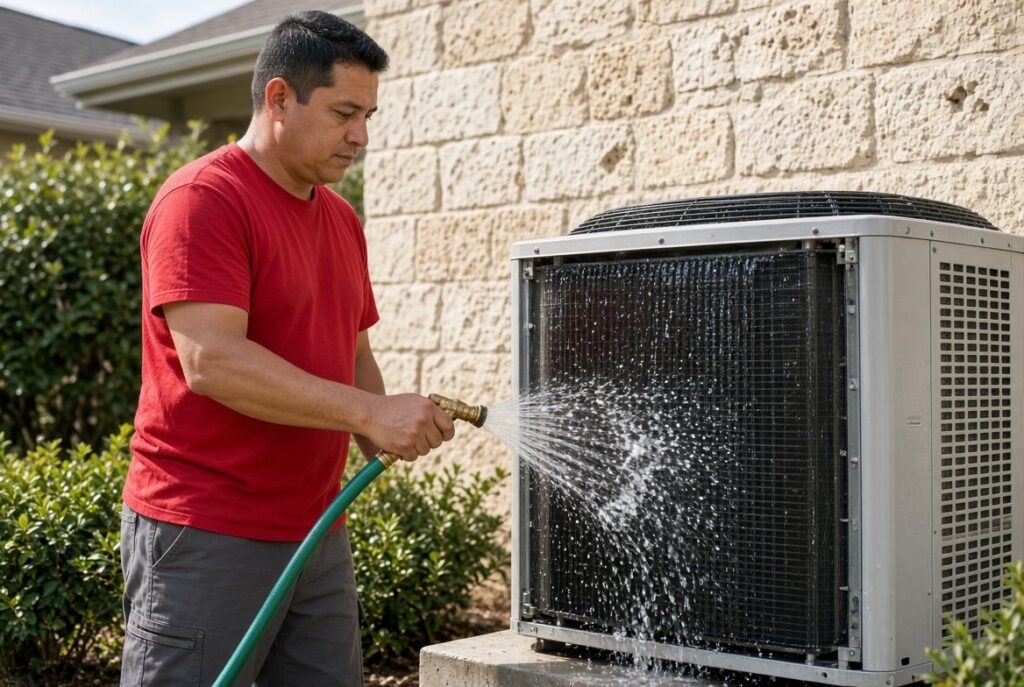
An air conditioner cools your home by moving heat, and the coils are where that heat transfer happens. When coils get coated with dust, dirt, or debris, the system has to work harder to do the same job. In San Antonio, where an AC may run for long stretches from spring into fall, regular AC coil cleaning makes a real difference in performance.
Two coils, two different jobs
Most central air systems have an evaporator coil indoors, usually above or beside the furnace or air handler, and a condenser coil wrapped around the outdoor unit. The evaporator coil absorbs heat from the air inside your home. The condenser coil releases that heat outdoors. Both need clean surfaces and good airflow to work properly.
What makes coils dirty
The outdoor coil collects grass clippings, leaves, cottonwood fluff, dust, and pet hair. Plants growing too close can block airflow. The indoor coil is protected by the air filter, but fine dust that slips past a loose or overloaded filter can build up over time. Because the evaporator coil is cold and wet during cooling, that dust can trap moisture and support biological growth.
Signs your coils need attention
- The AC runs longer than usual to reach the set temperature
- Airflow from vents feels weaker or less cool
- Utility bills climb without a change in how you use the system
- Ice forms on the indoor coil or refrigerant lines
- A musty smell comes from the vents
- The outdoor coil looks matted with dirt or debris
Several of these signs can also point to refrigerant, airflow, or drainage problems, so a professional inspection is the best way to confirm the cause. If ice is already forming, our guide on what to do when your AC freezes up explains the next steps.
Why AC coil cleaning matters
A dirty condenser coil makes it harder for the system to release heat, which raises operating pressures and can strain the compressor during hot afternoons. A dirty evaporator coil reduces airflow and heat absorption, which can affect comfort, humidity removal, and drainage. Keeping both coils clean supports steadier cooling and helps the equipment avoid unnecessary stress.
What homeowners can safely do
Keep plants, fences, and stored items a couple of feet away from the outdoor unit. After mowing, clear clippings that have blown against the coil. Replace your air filter on schedule to protect the indoor coil. Avoid pressure washers and stiff brushes, which can bend the thin aluminum fins. Indoor coil cleaning should be left to a professional, since it requires opening equipment and protecting the drain system.
What professional AC coil cleaning includes
A professional coil cleaning begins by shutting off power to the equipment and inspecting both coils to see where buildup is present. For the outdoor condenser, the technician clears debris, applies an appropriate coil cleaner, and rinses from the inside out at low pressure so dirt is pushed away from the fins rather than deeper into them. Bent fins can be carefully straightened to restore airflow.
The indoor evaporator coil takes more care. Access panels are removed, the coil is cleaned with a product made for indoor use, and the drain pan and condensate line are checked so rinse water and loosened debris drain properly. The technician may also inspect the blower wheel, since dust there often ends up on the coil. Afterward, the system is restarted and checked for normal operation. Ask which coil was cleaned, what condition it was in, and whether anything else, such as a dirty blower or a slow drain, needs attention.
AC coil cleaning FAQs
How often should AC coils be cleaned?
It depends on the home and its surroundings. Coils are commonly inspected during routine maintenance and cleaned when buildup is found; homes with pets, nearby construction, or heavy grass and cottonwood debris may need cleaning more often.
Can I clean my AC coils myself?
You can keep the outdoor unit clear of debris and gently rinse it with a garden hose after turning off power at the disconnect. The indoor evaporator coil should be cleaned by a professional.
Can dirty coils cause my AC to freeze?
Yes. A dirty evaporator coil restricts airflow and heat absorption, which can lead to ice on the coil or refrigerant lines. If you see ice, turn the system off and schedule service; regular HVAC maintenance helps catch buildup early.
Does coil cleaning lower energy bills?
Clean coils transfer heat more effectively, which can help the system reach the set temperature with less run time. How much it helps depends on how dirty the coils were and the system’s overall condition.
AC coil cleaning across the San Antonio area
HVAC Quality Solutions provides AC coil cleaning for San Antonio and Bexar County, including Helotes, Leon Valley, Shavano Park, Castle Hills, Boerne, and Fair Oaks Ranch. If your AC is running longer, freezing up, or struggling to keep the house cool, contact our team or call or text (830) 765-2048 to confirm appointment availability. You can also explore an AC tune-up for seasonal care before the next stretch of Texas heat.