
How San Antonio’s Heat Affects Your AC Compressor
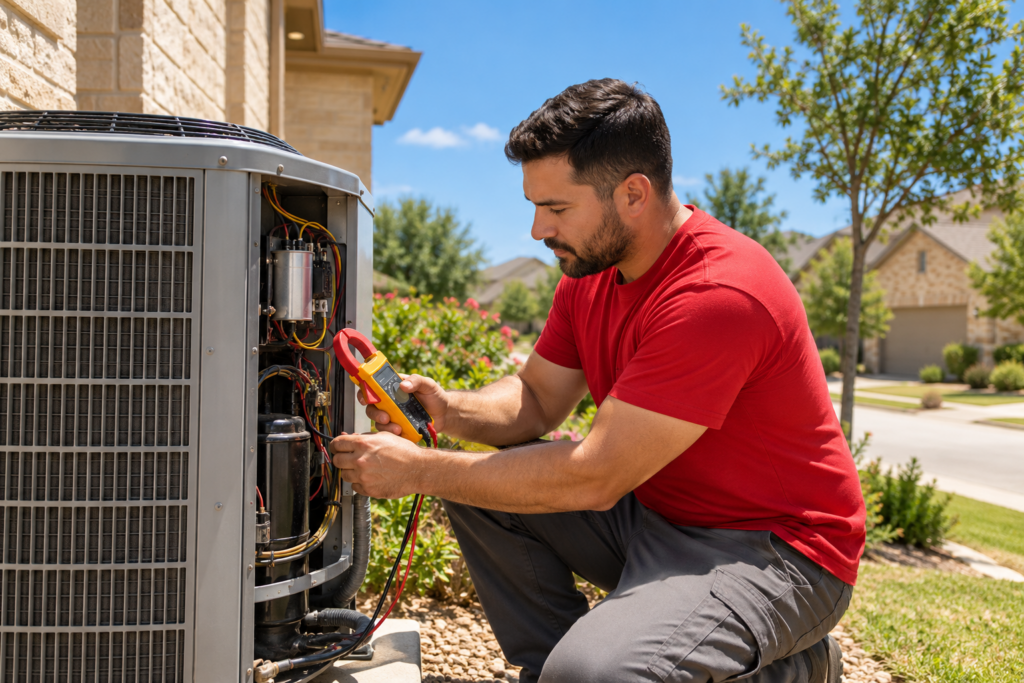
When a San Antonio summer afternoon pushes your air conditioner for hours at a time, the compressor is doing the hardest work in the system. This sealed component moves refrigerant so your home can release heat outdoors. If it struggles, the whole system can lose cooling, run longer, or stop altogether.
Why extreme heat is hard on a compressor
Every AC system is designed to operate in warm weather, but long stretches of high outdoor temperatures raise the pressure and workload inside the refrigeration cycle. A dirty outdoor coil, restricted airflow, weak capacitor, low refrigerant charge, electrical issue, or an aging unit can make that workload even heavier. The compressor may overheat or cycle off on safety controls, leaving your home warmer than expected.
In South Texas, a thermostat set very low cannot force a tired system to cool faster. It can simply keep it running longer. Keeping doors and blinds closed during peak sun, replacing a clogged filter, and keeping the condenser clear of leaves and grass can reduce unnecessary strain.
Signs it is time to call for AC repair
- Warm air or noticeably weaker cooling from the vents
- A humming, clicking, or hard-start sound at the outdoor unit
- Frequent breaker trips or repeated short cycling
- Ice on refrigerant lines or water around the indoor equipment
- Energy bills that rise while comfort falls
These symptoms can have several causes, so a professional diagnosis matters. Continuing to run a system that is overheating can turn a smaller repair into a larger one. Our AC repair team can check electrical components, airflow, coils, refrigerant performance, and compressor operation before recommending the right next step.
Protect your system before the next heat wave
Seasonal service is one of the simplest ways to spot issues before peak demand. A thorough HVAC maintenance visit helps identify dirty coils, loose electrical connections, drainage concerns, and worn parts that can affect cooling performance. If your system is older and repairs are becoming frequent, we can also help you weigh repair versus replacement without pressure.
What the compressor does
The compressor sits inside the outdoor unit and pumps refrigerant through the system. It raises the refrigerant’s pressure and temperature so the outdoor coil can release the heat removed from your home. On a 100-degree afternoon, the outdoor coil has less room to shed that heat, so the compressor works under higher pressure and runs for longer stretches. That is why the hottest weeks of the year are also when weak compressors and their starting components tend to fail.
Parts that protect the compressor
Several smaller parts help the compressor start and run safely. A capacitor gives it the boost it needs to start, a contactor switches it on and off, and pressure and temperature safeties shut it down when conditions are unsafe. When these parts wear out, the compressor may hum without starting, trip the breaker, or cycle on and off. Replacing a failing capacitor or contactor early is far less expensive than replacing a compressor. Our guides to AC capacitor replacement and soft start vs. hard start kits explain those components.
Repair or replace after a compressor failure?
A failed compressor is one of the most significant AC repairs. On a newer system that is under warranty, replacing the compressor may make sense. On an older system, especially one with other wear or an outdated refrigerant, replacing the outdoor unit or the full system is often worth comparing. Ask for both options in writing. Our guide to AC repair or replacement walks through the decision.
Keep the outdoor coil clean
A dirty condenser coil makes it harder for the system to release heat, which raises the pressure the compressor works against. Keeping the outdoor unit clear and having the coil cleaned during maintenance is one of the simplest ways to reduce compressor stress. See our guide to AC coil cleaning.
AC compressor FAQs
What are the signs of a failing AC compressor?
Common signs include warm air from the vents, an outdoor unit that hums but will not start, a breaker that trips, loud grinding or clanking, and a system that short-cycles. Some of these can also come from the capacitor or contactor, so a diagnosis matters.
Why do AC compressors fail in hot weather?
Extreme heat raises operating pressures and run times. Dirty coils, low refrigerant, and worn starting components add stress, which is why failures often happen during the hottest weeks.
Can an AC compressor be repaired?
Compressors are usually replaced rather than repaired internally. Often, a failed starting component such as a capacitor or contactor is the real problem, which is a much smaller repair.
How can I protect my AC compressor?
Keep the outdoor coil clean and clear, change filters on schedule, have the system maintained before summer, and address electrical warning signs, such as humming or clicking at startup, promptly.
AC repair across the San Antonio area
HVAC Quality Solutions provides AC repair for San Antonio and Bexar County, including Helotes, Leon Valley, Shavano Park, Castle Hills, Boerne, and Fair Oaks Ranch. If your AC struggles on hot afternoons, hums without starting, or trips the breaker, contact our team or call or text (830) 765-2048 to confirm appointment availability. You can also explore HVAC maintenance to reduce compressor stress before the next heat wave.